
Designing a Scalable API-First SaaS Web App with React and Node
Building a scalable web application has become an essential strategy for businesses looking to succeed in the digital world. One widely adopted method is the API-first architecture, which enhances the interaction between the backend and frontend of applications, using popular frameworks like React and Node.js. This article will guide you through the design of a scalable API-first Software as a Service (SaaS) web application that prioritizes performance and is optimized for Progressive Web App (PWA) capabilities.
Estimated reading time: 8 minutes
- Understand the API-first approach and its importance.
- Explore architectural strategies using React and Node.js.
- Learn how to address common challenges in API development.
- Examine real-world applications and scenarios.
- Discover performance optimization techniques for your web app.
Context and Challenges
Before delving into the solutions, it’s critical to define the API-first approach. This design paradigm prioritizes developing application programming interfaces before building the application itself. This method enables concurrent team efforts on different application components, making it particularly beneficial for scalability.
Nonetheless, the API-first approach comes with its challenges:
- Secure Data Transfer: Ensuring data is securely transmitted between clients and servers is paramount.
- Managing Multiple Client Applications: Balancing requests from various clients can complicate backend service management.
- Performance Optimization: It is vital to maintain performance while creating a responsive user interface.
Recognizing these challenges is vital in an era where user experience is critical. Inadequate performance can drive away potential customers, emphasizing the need for a well-optimized system from the outset.
Solution / Approach
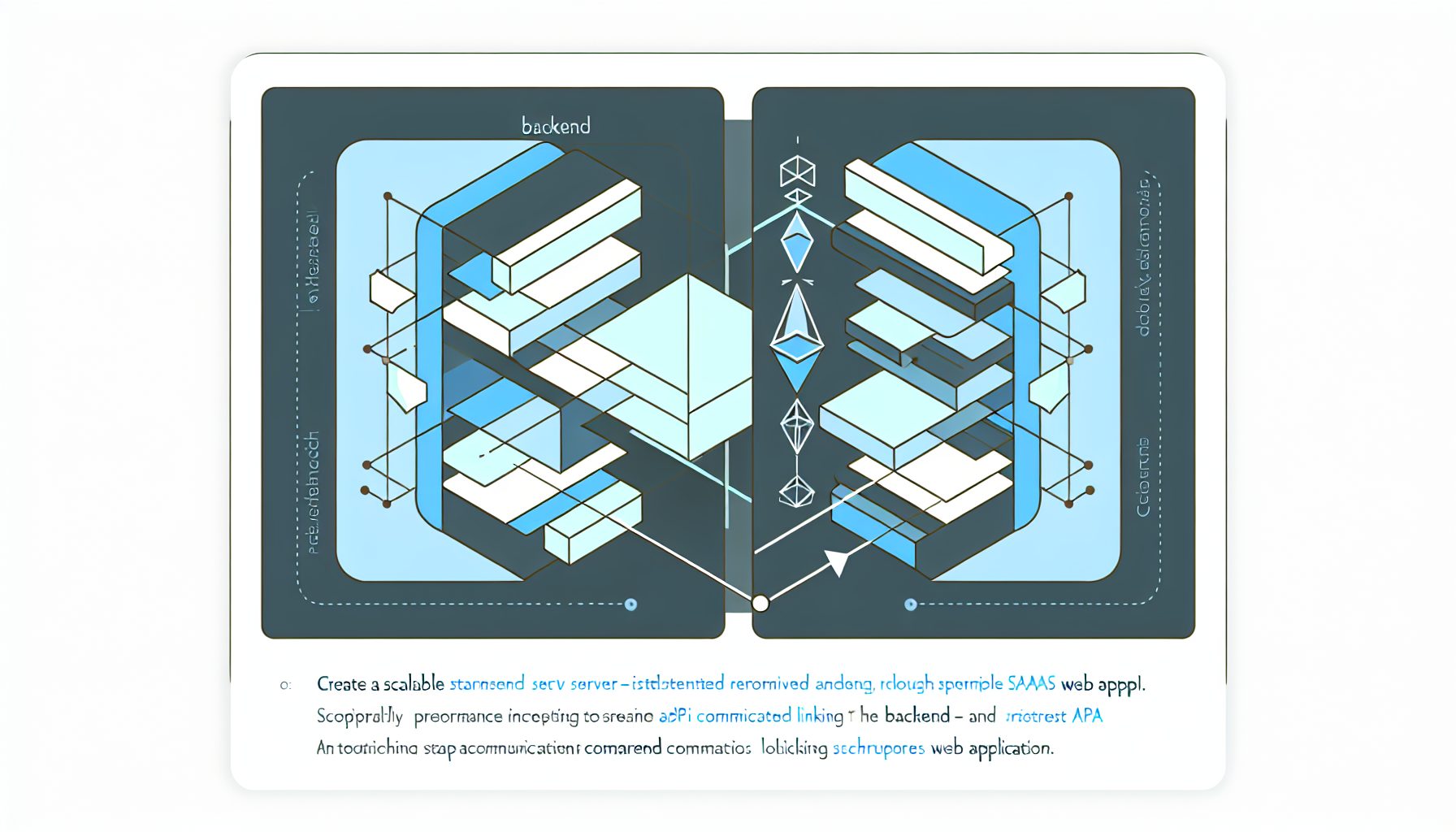
The key to creating a scalable API-first SaaS web app lies in a robust architecture that distinctly separates frontend and backend concerns. This separation allows for independent scaling and performance optimization. Below is a simplified layout of our architecture:
- Frontend: Built with React to create a dynamic, responsive user interface.
- Backend: Node.js and Express for developing RESTful APIs that manage data and business logic.
- Database: A NoSQL database like MongoDB for flexible and schema-less data storage.
- Caching: Implement caching strategies using Redis to boost application performance.
To further enhance this approach and make the application PWA-ready, one can integrate service workers and a manifest file. This integration improves load times and offline functionality, delivering a seamless user experience.
For practical applications in web development, teams such as MySushiCode advocate a methodical approach that emphasizes reusable components and modular architecture. This methodology facilitates quick iterations and updates without sacrificing performance or user experience.
Concrete Example / Case Study
Let’s consider a hypothetical project management tool designed for small teams to manage tasks, deadlines, and collaborations:
- Frontend: Utilize React to create a single-page application (SPA). Each component handles user interactions, such as task creation or commenting. Optimize rendering with React hooks to reduce unnecessary re-renders.
- Backend: Utilize Node.js with Express to build an API for supporting CRUD operations. For example, when a user creates a task, an API endpoint handles the POST request, storing the data in MongoDB. Implement authentication using JSON Web Tokens (JWT) to secure access.
- Database: Choose MongoDB for its flexibility in storing tasks, allowing easy retrieval and filtering based on team members, due dates, etc.
- Caching: Use Redis to cache frequently requested data, such as user settings or common task queries, significantly improving response time.
- PWA Enhancements: Set up a service worker for caching essential files for offline use and create a manifest file for users to install the app on their devices.
This structured methodology not only elevates performance but also simplifies scaling as user demand grows.
FAQ
What are the main benefits of using an API-first approach?
The API-first approach fosters improved collaboration across teams, enhances scalability, and affords the flexibility to leverage various technologies in the frontend and backend. Furthermore, it simplifies integration with third-party services.
How can I ensure my API is secure?
Implement security best practices such as using HTTPS, authentication and authorization methods like OAuth2 or JWT, and robust input validation to greatly enhance API security.
What are the key performance optimization strategies?
Key strategies involve lazy loading assets in the frontend, optimizing database queries, utilizing caching mechanisms, and tuning server configurations to effectively manage increased loads.
Authority References
For further exploration, consider the following resources:
- React Documentation
- Express Documentation
- Node.js Documentation
- MongoDB Documentation
- Redis Documentation
Conclusion
In summary, designing a scalable API-first SaaS web application using React and Node represents a strategic approach that effectively addresses performance challenges and positions your application for future growth. By focusing on a modular architecture and utilizing best practices such as caching and service workers, you can develop a user-friendly, responsive product that excels in a competitive market. The journey of creating scalable applications begins with a clear understanding of user needs and designing adaptable solutions that can evolve with them.


Leave a Reply