
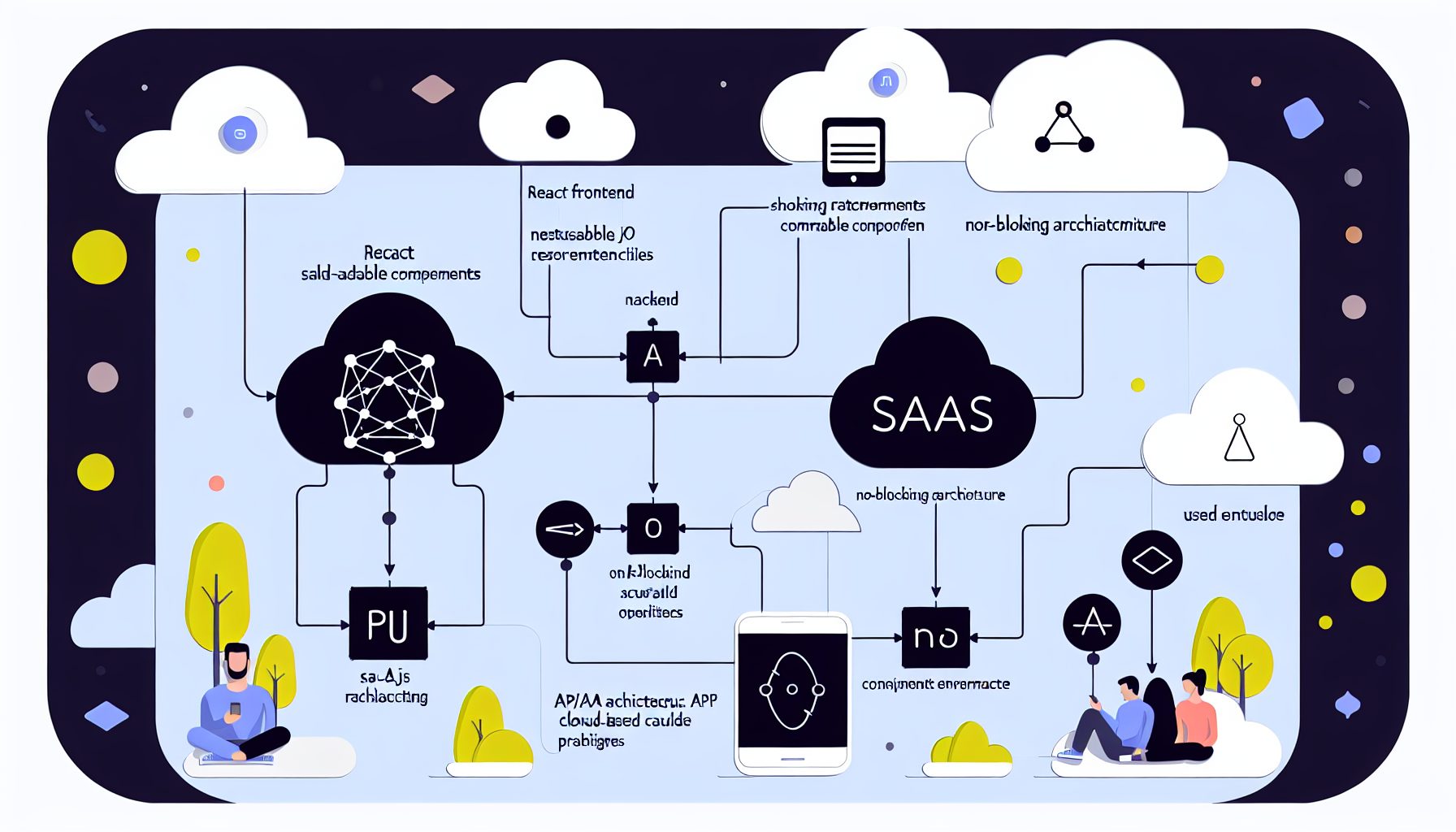
Designing a Scalable SaaS Web App: React Frontend, Node Backend, API-First Architecture, and PWA Enhancements
In the fast-paced world of Software as a Service (SaaS), the ability to scale effectively can determine a product’s success. As technology grows and user demands shift, designing a scalable SaaS web application becomes paramount for developers and businesses alike. In this article, we’ll explore how to create a scalable SaaS web app using a React frontend, a Node.js backend, an API-first architecture, and Progressive Web App (PWA) enhancements.
Estimated Reading Time: 7 minutes
Key Takeaways
- The architecture of a SaaS application is critical for scalability and performance.
- Using a React frontend provides a clean and maintainable codebase through reusable components.
- Node.js enhances scalability with its non-blocking I/O features.
- An API-first architecture facilitates easy integrations and flexible application updates.
- PWA features improve user engagement and offline accessibility.
Context and Challenges
Before diving into solutions, it’s essential to understand what we mean by a SaaS web app. At its core, SaaS allows users to access software over the Internet—there’s no need to install or maintain it; everything is hosted in the cloud. However, designing such an application involves various challenges, including:
- Scalability: As the number of users grows, the application must handle increased traffic without lagging or crashing.
- Maintainability: Writing clean, maintainable code is crucial. Keeping the architecture organized leads to easier updates and feature additions.
- Performance: The user experience heavily depends on quick load times and smooth interactions.
- Security: Protecting user data and ensuring secure transactions is not just mandatory; it’s a priority.
With these challenges in mind, let’s explore the approach to building this application.
Solution / Approach
To design a scalable SaaS web app, we propose a three-pronged approach utilizing React for the frontend, Node.js for the backend, and an API-first architecture bolstered by PWA enhancements.
1. React Frontend
React, a popular JavaScript library, allows developers to build dynamic user interfaces. It excels in creating reusable components; meaning your codebase remains clean and organized. For example, if you have a user profile component, it can be reused across different parts of the application, ensuring consistency and reducing redundancy.
2. Node.js Backend
Node.js is an open-source, cross-platform JavaScript environment that enables server-side scripting. Using Node.js for your backend provides several advantages:
- Non-blocking I/O: This feature allows multiple operations to be handled simultaneously, making it highly scalable.
- Single Language Stack: Using JavaScript on both the front and back-end simplifies development, allowing for easier collaboration between team members.
3. API-First Architecture
By adopting an API-first strategy, your app can interact seamlessly with various services and third-party integrations. This approach not only enhances flexibility but allows developers to update or change parts of the system without impacting the overall application performance. For example, if you wanted to integrate a new payment service, you could easily achieve this by connecting to your existing APIs.
For a robust implementation, consider consulting a full stack agency like MySushiCode. They specialize in building scalable applications and can provide insights into best practices and effective workflow management.
4. PWA Enhancements
Progressive Web Apps (PWAs) offer significant benefits, such as offline access and improved loading times through service workers and caching. By adopting PWA principles, your app can provide users with a native-like experience, significantly increasing user engagement and retention.
Concrete Example / Case Study
Let’s take a hypothetical example where we’re developing a project management tool as a SaaS web app. We can break down the implementation as follows:
- Frontend: Using React, we build a component for creating and managing tasks. This component calls an API to fetch or submit data to the backend.
- Backend: A Node.js server listens for requests from the frontend. When a task is created, the server processes the request, performs necessary validations, and stores the data in a MongoDB database.
- API Design: We design RESTful APIs that allow the frontend to interact with the backend smoothly. Requests like
POST /tasksfor creating a task orGET /tasksfor fetching all tasks would be easily integrated. - PWA Features: By implementing a service worker, users could continue working offline and sync their data once they reconnect.
This structured approach allows for flexibility in features and the ease of deploying updates as user needs grow and evolve.
FAQ
1. What are the main benefits of using React for the frontend of a SaaS application?
React allows for reusable components, enhances performance through virtual DOM, and improves user experience with dynamic interfaces, making it an excellent choice for scalable applications.
2. How does Node.js improve scalability in a web application?
Node.js uses a non-blocking I/O model that permits handling numerous requests simultaneously, allowing the application to scale effectively without performance issues.
3. What are the advantages of implementing a PWA?
PWAs enhance user experience with faster loading times, offline capabilities, and improved performance, which can lead to higher user retention and engagement.
Authority References
Conclusion
Building a scalable SaaS web app requires careful consideration of technology stacks and architectural patterns. By utilizing a React frontend, Node.js backend, API-first architecture, and enhancing with PWA features, you can create an application that not only scales with your user base but also offers a seamless user experience. As you embark on this journey, remember that the most effective applications are built on solid foundations, keeping performance, maintainability, and user engagement at the forefront of your design process.


Leave a Reply