
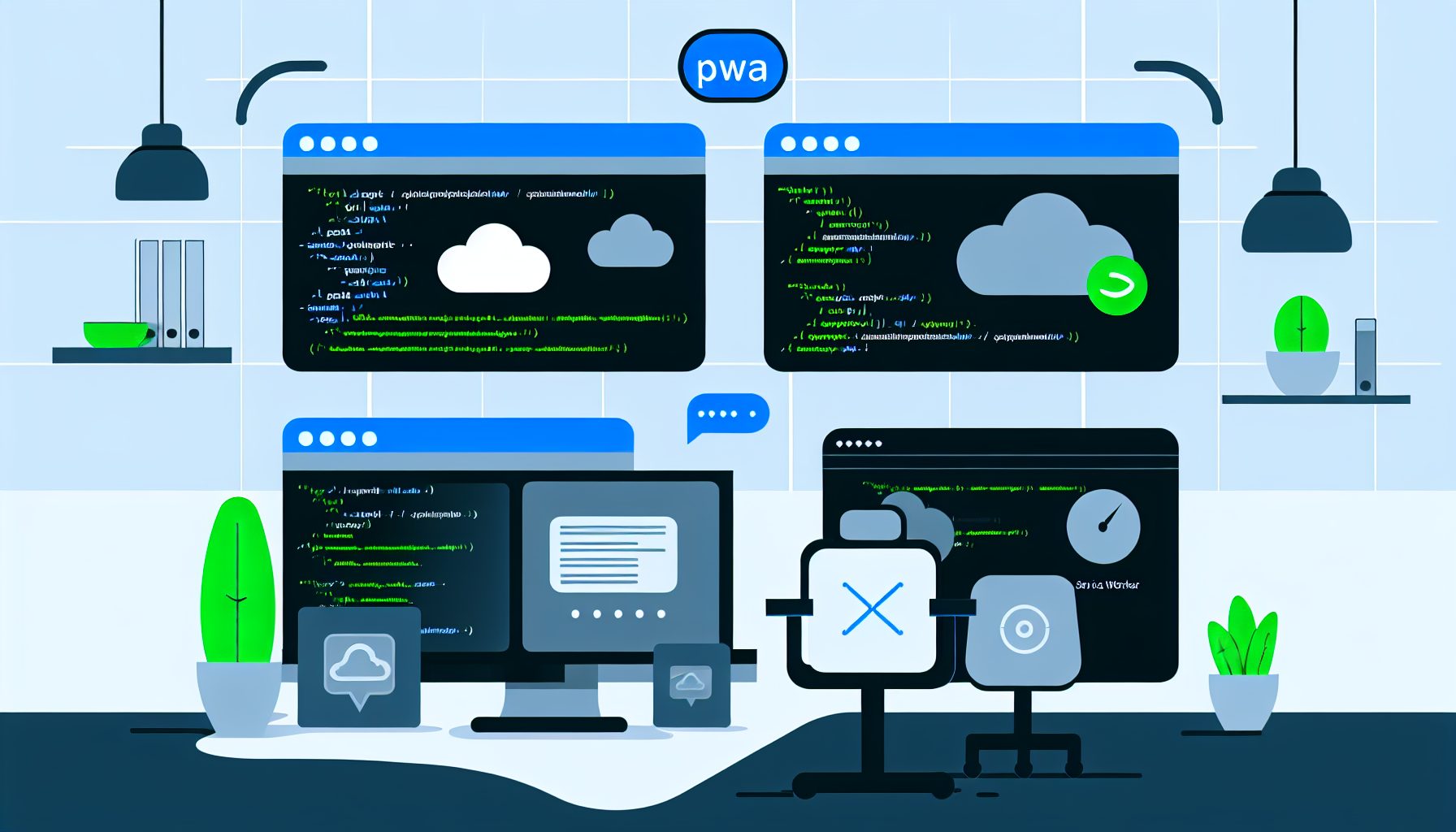
Building a Scalable Progressive Web App (PWA) with React and Node for SaaS Frontends
In today’s digital landscape, users expect fast, reliable, and engaging web applications that provide an app-like experience. Progressive Web Apps (PWAs) fulfill this need while offering businesses a cost-effective and high-performance solution. When paired with powerful frameworks like React for the frontend and Node.js for the backend, building a scalable PWA becomes not only feasible but also efficient.
Estimated Reading Time: 7 minutes
- PWA offers offline capabilities, fast loading, and push notifications.
- Utilize React’s component-driven structure for better maintainability.
- Node.js with Express.js optimizes backend performance.
- Implement service workers to enhance loading speeds.
- Use Redux or Context API for efficient state management.
Table of Contents
- Context and Challenges
- Solution / Approach
- Architecture
- Concrete Example / Case Study
- Frequently Asked Questions (FAQ)
- Conclusion
- Authority References
Context and Challenges
Progressive Web Apps are web applications that leverage modern web capabilities to deliver an app-like experience. This means they load quickly, work offline, and can send push notifications. However, creating a scalable PWA comes with its challenges, especially when building a Software as a Service (SaaS) product. You need to consider factors such as user engagement, performance metrics, and offline functionality, alongside ensuring a seamless user experience.
One major pain point is the complexity of managing state effectively in a React application. React’s component-based architecture allows for excellent separation of concerns, but this can lead to challenges when handling global state, particularly in large applications. Additionally, integrating Node.js seamlessly for backend services, while maintaining optimal performance, can require careful planning and execution.
Solution / Approach
The key to building a scalable PWA with React and Node.js lies in a well-architected approach that leverages component reusability, efficient state management, and a robust server-side structure. Start your project by setting up a React frontend utilizing tools like Create React App, followed by integrating a Node.js backend using Express.js.
Utilizing Redux or Context API for state management in your React app ensures that your application remains responsive and components render correctly as data changes. This is vital in SaaS applications where data can frequently update in real-time.
For the backend, Node.js coupled with Express.js can efficiently handle API requests, ensuring users receive timely data updates. Storing user data and ensuring seamless interaction via a database like MongoDB or PostgreSQL is crucial for maintaining the smoothness of the service.
Additionally, PWAs utilize service workers to cache app resources, allowing your application to load quickly even on slow networks. To facilitate this, consider implementing the Workbox library, which helps manage caching strategies effortlessly. You might find approaches to web development effective when you explore resources like MySushiCode, as they focus on leveraging modern tech stacks.
Architecture
To design an effective architecture for a scalable PWA, there are several key considerations:
- Frontend Architecture: Build components that are reusable and easy to manage. Use React Router for seamless navigation across various views.
- Backend Structure: Create a RESTful API using Express.js that interfaces with your database, enabling efficient data retrieval and updates.
- Service Workers: Define caching strategies for your service workers to optimize loading times and offline experiences.
- State Management Strategy: Choose between Redux or Context API based on the complexity and requirements of your application.
Concrete Example / Case Study
Imagine you’re developing a SaaS application for task management. You could begin with a robust React frontend that features a dashboard where users can create and manage their tasks. Use React Router for handling different views within your application, allowing users to navigate seamlessly.
On the backend, set up a Node.js server with Express. Create endpoints for user authentication, task retrieval, and task management. Utilizing JWT (JSON Web Tokens) will help you manage user sessions effectively. Implement a database model where each user’s tasks are stored in a way that allows for efficient retrieval and manipulation.
Your app should also utilize service workers to cache the application shell, so when users return, they can access the application offline. This significantly enhances user satisfaction, as they can continue working even without a stable internet connection.
Frequently Asked Questions (FAQ)
What are the key benefits of using React for building a PWA?
React provides a component-driven architecture that leads to better maintainability and code reuse, which is essential for large-scale applications. Its virtual DOM enhances performance, making your PWA feel more responsive.
How can I improve the performance of my PWA?
Focus on optimizing images, using efficient caching strategies, and minimizing network requests. Additionally, you can leverage code splitting and lazy loading to improve initial load times.
Is it necessary to use a backend with a PWA?
While it’s possible to build static PWAs without a backend, incorporating a backend using Node.js allows for dynamic data handling, user authentication, real-time updates, and much more, significantly enriching user experience.
Authority References
- MDN Web Docs on Progressive Web Apps
- Official React Documentation
- Express.js Installation Guide
- Workbox for Caching Strategies
Conclusion
Building a scalable Progressive Web App with React and Node.js offers an exceptional path for delivering rich user experiences. By leveraging modern tools and methodologies, you can enhance engagement and performance, ensuring user satisfaction. Consider the implementation strategies discussed and remember that the right architecture is the foundation of a successful SaaS application. Start coding your PWA today, and watch as it transforms how users interact with your platform.


Leave a Reply