
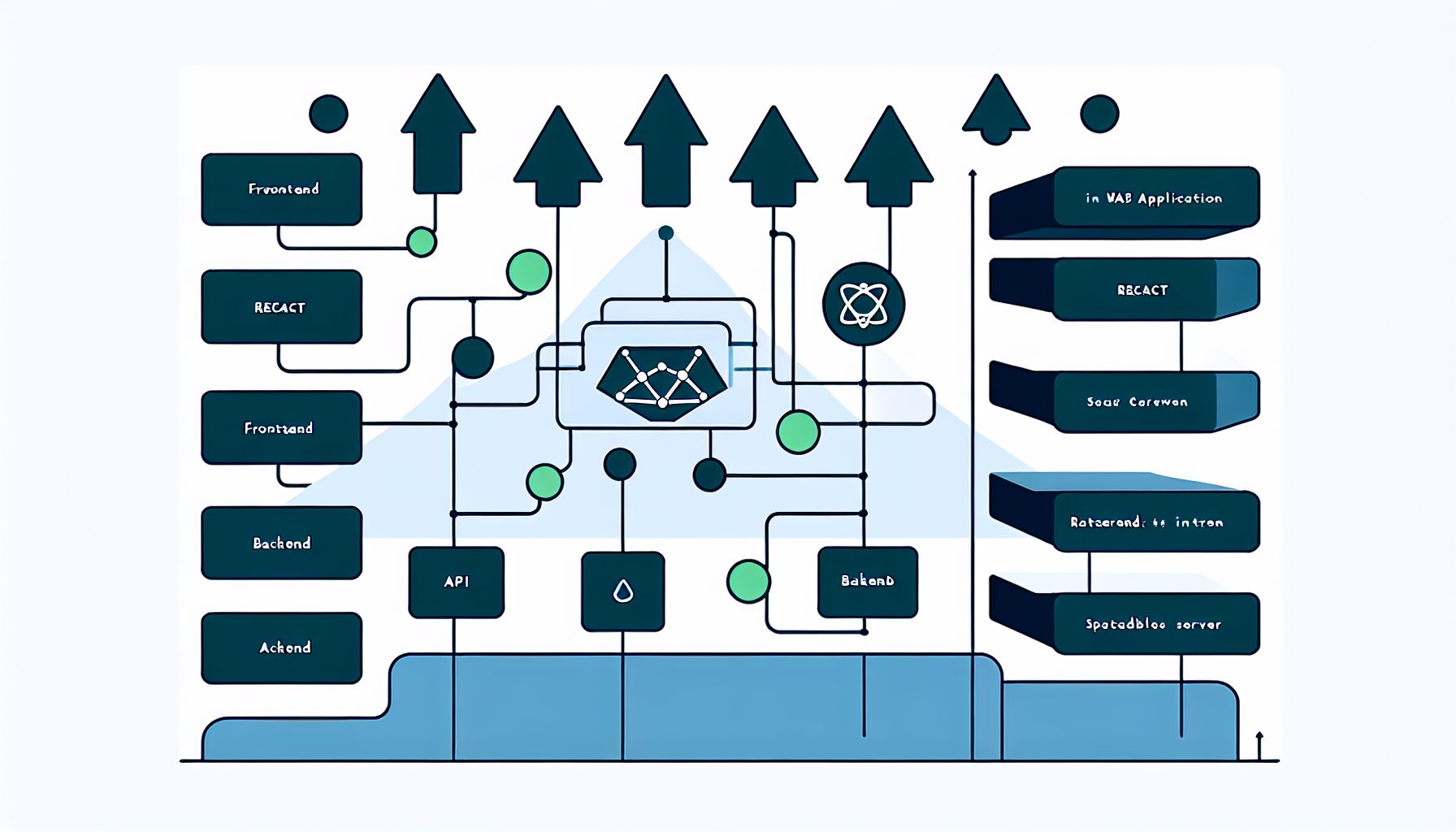
Designing a Scalable API-First SaaS Web App: A React Frontend + Node Backend + PWA Blueprint
In today’s fast-paced digital environment, the development of scalable web applications is essential for meeting customer needs and facilitating business growth. An API-first Software as a Service (SaaS) web app that incorporates a React frontend, Node.js backend, and progressive web application (PWA) features provides a robust framework to accommodate increasing user demands and diverse platform accessibility.
Estimated Reading Time: 10 minutes
Key Takeaways
- Scalability is crucial for modern web apps given the rapid growth of user bases.
- An API-first approach enhances team collaboration and integration capabilities.
- Using a combination of React and Node.js allows for efficient real-time data processing.
- Progressive web applications improve user experience with offline capabilities.
- Planning the architecture meticulously ensures better performance and maintainability in the long run.
Table of Contents
- Context and Challenges
- Solution / Approach
- Concrete Example / Case Study
- FAQ
- Authority References
- Conclusion
Context and Challenges
When it comes to designing scalable web applications, developers face the ongoing challenge of balancing performance, responsiveness, and maintainability. APIs sit at the core of modern applications by enabling seamless communication between frontend and backend systems, ultimately supporting efficient scaling as user demand increases.
Technical teams often grapple with the integration of new technologies while ensuring that existing legacy systems remain operational. Considerations regarding data security, user privacy, and real-time data handling are critical in shaping application architecture. Understanding these operational constraints aids teams in developing solutions that can effectively meet user expectations.
Solution / Approach
The proposed architecture consists of a React-based frontend and a Node.js backend, packaged as a PWA. This setup enables developers to deliver applications that are not only swift and responsive but also equipped with offline functionalities and push notifications.
The component-based framework of React facilitates the creation of reusable and maintainable user interfaces, while the asynchronous nature of Node.js’s non-blocking I/O operations makes it ideal for handling high-volume real-time interactions.
Prioritizing an API-first approach in the development process is essential. By designing and building APIs first, the application can lay down a foundation for effective communication across all components, allowing the frontend to be developed in isolation from the backend as needed. For a practical look at harnessing these technologies for web application development, explore MySushiCode.
Concrete Example / Case Study
Imagine a startup aiming to create a SaaS application focused on project management. Initially, the team designs a comprehensive API capable of managing key operations such as project and task creation, updates, and deletions. By leveraging Node.js for the API’s development, the team can efficiently handle thousands of simultaneous requests.
On the frontend, the team employs React to create a dynamic user interface. User actions like adding tasks and updating project statuses communicate with the Node backend via API requests. This separation fosters enhanced performance and simplifies maintenance as the application scales.
As the user base expands, the team decides to transform their web app into a PWA to enhance its utility. Implementing service workers enables the caching of assets and data, empowering users to interact with the application offline. This capability significantly boosts the user experience, leading to improved retention rates and customer satisfaction.
FAQ
1. What are the advantages of an API-first approach?
An API-first approach encourages greater team collaboration, facilitates the integration of third-party services, and provides flexibility for various client interactions, improving overall system adaptability.
2. How can I ensure my PWA is performing efficiently?
To ensure optimal performance, developers should implement effective caching strategies, optimize asset sizes, and manage service worker registrations diligently. Regular use of performance audit tools like Google Lighthouse can help pinpoint areas needing improvement.
3. What are key considerations for building a scalable backend with Node.js?
In constructing a scalable backend, it’s crucial to consider deploying clustering to simultaneously manage multiple connections, utilizing asynchronous programming for improved throughput, and selecting databases that can scale effectively to accommodate growth.
Authority References
For further reading and authoritative insights on scalable web applications, consider the following resources:
Conclusion
In summary, designing a scalable API-first SaaS web app utilizing a React frontend, Node.js backend, and PWA capabilities not only addresses contemporary user demands but also simplifies future development pathways. By adopting an API-first mindset, organizations can ensure their applications are positioned for growth alongside their business. Taking the time to thoughtfully plan and implement a sound architectural strategy can greatly enhance both performance and scalability for web applications.


Leave a Reply