
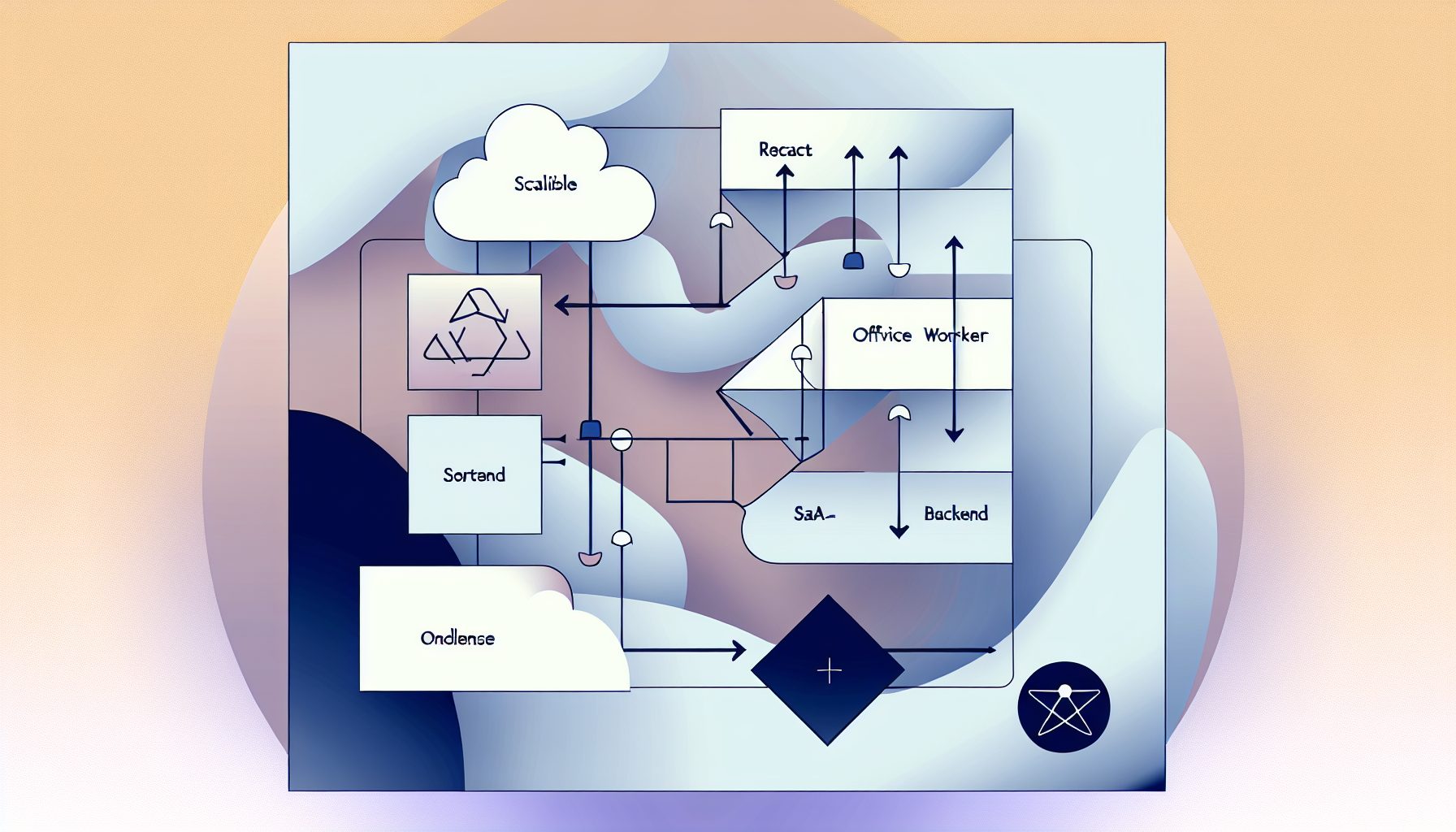
Scalable SaaS Web Apps: Architecting React Frontends with Node Backends for Offline-First PWAs
In today’s fast-paced digital environment, users demand applications that are not only responsive and reliable but also capable of functioning without an internet connection. This need presents an exciting opportunity for developers to create scalable Software as a Service (SaaS) web applications. In this article, we will delve into designing an offline-first Progressive Web App (PWA) using React for the frontend and Node.js for the backend.
Estimated reading time: 8 minutes
- Understand the importance of offline capabilities in SaaS applications.
- Explore the roles of React and Node.js in web development.
- Learn how service workers contribute to offline functionality.
- Examine a case study on implementing a project management tool.
- Gain insights into data synchronization strategies.
Table of Contents
- Context and Challenges
- Solution / Approach
- Concrete Example / Case Study
- FAQ
- Authority References
- Conclusion
Context and Challenges
As the demand for SaaS web applications escalates, so does their complexity. These applications must accommodate multiple users, process simultaneous requests, and manage substantial data volumes. Additionally, providing access without a consistent internet connection adds an extra layer of challenge.
Key challenges include:
- Ensuring state persistence when users go offline.
- Handling data synchronization without conflicts.
- Creating a user-friendly experience that rivals native applications.
Solution / Approach
To architect a scalable SaaS application that functions offline, combining a React frontend with a Node.js backend proves effective. React facilitates a reactive user interface adept at efficiently managing local state, while Node.js provides a robust environment for server-side logic and API development.
Offline capabilities can be achieved through the implementation of service workers, which cache resources and data locally, enabling users to interact with the application even in the absence of connectivity. This architecture is designed to seamlessly synchronize data once the connection is restored.
For further insights into building offline-first applications, resources from MySushiCode provide comprehensive best practices and methodologies in this domain.
Concrete Example / Case Study
Consider a project management tool developed as a scalable SaaS application. The React-based frontend allows users to create, view, and manage tasks, while the Node.js backend handles user authentication, task data storage, and synchronization with a database.
Upon the initial loading of the app, the service worker caches critical components like HTML, CSS, and JavaScript bundles, ensuring availability even when offline. Edits made to tasks while offline get stored in IndexedDB, preserving changes across sessions. Once the internet connection is restored, a background synchronization process triggers an update to the server with the latest changes, guaranteeing that all data remains consistent and up-to-date.
This case study illustrates the balance between functionality and user experience, demonstrating how developers can craft responsive, offline-capable SaaS applications that deliver seamless performance across varying network conditions.
FAQ
1. What is a Progressive Web App (PWA)?
A PWA is a web application leveraging modern web capabilities to provide users with an app-like experience. Key features include offline access, push notifications, and the ability to install the app on users’ devices directly from the browser.
2. How do service workers enhance offline capabilities?
Service workers function as intermediaries between the web application and the network, intercepting requests and allowing developers to cache essential resources. This mechanism empowers the application to operate smoothly, even during offline periods.
3. What considerations should be made for data synchronization?
When implementing data synchronization, it is essential to adopt conflict resolution strategies, such as versioning or timestamping, to manage updates from multiple clients. Maintaining a seamless user experience while ensuring data integrity is crucial.
Authority References
Conclusion
Creating scalable SaaS web applications that support offline functionality is a significant challenge, yet with contemporary technologies like React and Node.js, it is increasingly attainable. By adopting the right architectural foundations and methodologies, developers can deliver applications that meet users’ expectations for accessibility and performance while taking full advantage of modern web capabilities.


Leave a Reply